Category: Uncategorized

  • Stock Market

    : What It Is and How It Works ЁЯУИ

    The stock market is one of the most important parts of the financial system. It provides a platform where investors can buy and sell shares of companies. In India, the stock market is closely watched by investors, businesses and traders.

    What Is the Stock Market?

    The stock market is a marketplace where shares of publicly listed companies are traded. When you buy a company’s share, you become a small owner of that company.

    In India, major stock exchanges include the NSE (National Stock Exchange) and BSE (BSE Ltd.).

    How Does the Stock Market Work?

    Stock prices change throughout the trading day based on demand and supply. If more investors want to buy a stock, its price may rise. If more investors want to sell, the price may fall.

    Several factors can influence stock prices, including:

    • Company performance
    • Economic growth
    • Interest rates
    • Inflation
    • Global markets
    • Crude oil prices
    • Government policies
    • Investor sentiment

    Nifty and Sensex

    Two major indicators of the Indian stock market are Nifty 50 and Sensex.

    Nifty 50 tracks 50 major companies listed on the NSE, while Sensex tracks 30 major companies listed on the BSE. Their movements are commonly used to understand the overall direction of the Indian equity market.

    Why Is the Stock Market Important?

    The stock market helps companies raise money for business expansion and provides investors with an opportunity to participate in the growth of businesses.

    For investors, stocks can potentially provide long-term returns through capital appreciation and dividends. However, stock market investments also involve risk, and prices can move up or down.

    What Should Investors Watch?

    Investors should pay attention to company results, market trends, economic data, interest-rate decisions and global developments. It is also important to research a company before investing rather than making decisions based only on short-term market movements.

    Conclusion

    The stock market plays an important role in India’s economy. Understanding how Nifty, Sensex, companies and market factors work can help people make more informed financial decisions.

    However, investing in stocks carries market risk. Investors should consider their financial goals and risk tolerance and conduct proper research before making investment decisions.

    Keywords: Stock Market, Indian Stock Market, Stock Market India, Nifty 50, Sensex, Share Market, Stock Market Today


  • Indian Rupee vs Dollar тАУ тВ╣/$ Update

    The Indian Rupee vs Dollar (тВ╣/$) exchange rate is an important indicator for India’s economy and financial markets. The value of the rupee against the US dollar can affect imports, exports, fuel prices, inflation and the stock market.

    Rupee vs Dollar

    The Indian rupee moves against the US dollar based on demand and supply in the foreign exchange market. Global economic conditions, crude oil prices, interest rates and foreign investment can all influence the exchange rate.

    When the rupee weakens against the dollar, imported goods and commodities can become more expensive. When the rupee strengthens, import costs may become relatively lower.

    Why Is the Dollar Important for India?

    India imports several important products, including crude oil. Since many international commodities are priced in US dollars, changes in the rupee-dollar exchange rate can influence India’s import bill.

    A weaker rupee can therefore increase pressure on businesses and consumers through higher import costs.

    Key Factors Affecting the тВ╣/$ Rate

    Some major factors include:

    • US Federal Reserve interest-rate decisions
    • Reserve Bank of India policies
    • Crude oil prices
    • Foreign investment flows
    • India’s trade balance
    • Global economic conditions
    • Demand for the US dollar
    • Geopolitical developments

    Impact on Indian Consumers and Businesses

    A weaker rupee can increase the cost of imported products, fuel and some raw materials. It can also affect companies that depend heavily on imports.

    On the other hand, Indian exporters may benefit from a weaker rupee because their overseas earnings can translate into more rupees.

    Impact on the Stock Market

    Currency movements can influence different sectors of the Indian stock market. IT and export-oriented companies may benefit from a weaker rupee, while businesses that rely heavily on imported inputs may face higher costs.

    Investors therefore closely monitor the Indian Rupee vs Dollar тАУ тВ╣/$ Update along with Nifty and Sensex movements.

    Conclusion

    The Indian Rupee vs Dollar тАУ тВ╣/$ Update is important for investors, businesses and consumers. The exchange rate is influenced by domestic and international factors, so it can change frequently. Investors should follow official market data and carefully consider risks before making financial decisions.

    This article is for informational purposes only and is not financial or investment advice.

  • Stock Market Today тАУ Nifty & Sensex Update

    The Indian stock market remains an important focus for investors and traders. The Nifty 50 and Sensex are closely watched to understand the overall direction of the market.

    Nifty 50 Update

    The Nifty 50 is one of India’s major stock market indices. Its movement is influenced by large companies across sectors such as banking, IT, energy, automobiles and financial services.

    Investors are keeping an eye on global markets, crude oil prices, the Indian rupee and domestic economic developments. These factors can create volatility during trading sessions.

    Sensex Update

    The BSE Sensex tracks 30 major companies listed on the Bombay Stock Exchange. The index can move higher or lower depending on buying and selling activity in major stocks.

    Banking, technology, energy and other heavyweight stocks can have a significant impact on the Sensex.

    Key Factors Affecting the Market

    Some important factors to watch include:

    • Global stock market trends
    • Crude oil prices
    • Indian rupee against the US dollar
    • Foreign investor buying and selling
    • Interest-rate expectations
    • Company earnings and corporate news
    • Government and economic policies

    What Investors Should Watch

    Investors should watch major market indices, sector performance and important company announcements. Market conditions can change quickly, so short-term movements should not be considered a guarantee of future performance.

    Conclusion

    The Stock Market Today тАУ Nifty & Sensex Update is useful for understanding the direction of the Indian equity market. Nifty and Sensex movements are influenced by both domestic and global factors. Investors should research carefully and consider their risk before making investment decisions.

    This article is for informational purposes only and is not investment advice.

  • Stock Market Today

    Latest Market Updates

    The stock market is an important part of the financial system. It allows people and institutions to buy and sell shares of companies. Stock prices can change every day based on company performance, economic conditions, investor sentiment and global events.

    What Is the Stock Market?

    The stock market is a marketplace where shares of publicly listed companies are bought and sold. In India, major stock exchanges include the NSE (National Stock Exchange) and BSE (BSE Ltd.).

    Investors can participate in the market through shares, mutual funds, ETFs and other financial products.

    Nifty 50 and Sensex

    Two major indicators of the Indian stock market are:

    • Nifty 50 тАУ Tracks 50 major companies listed on the NSE.
    • Sensex тАУ Tracks 30 major companies listed on the BSE.

    These indices are commonly used to understand the overall direction of the Indian market.

    What Affects Stock Prices?

    Several factors can influence stock market movements:

    • Company earnings and financial results
    • Interest-rate decisions
    • Inflation and economic growth
    • Global market trends
    • Crude oil prices
    • Foreign investor activity
    • Government policies and major economic announcements

    Because of these factors, the market can rise or fall quickly.

    Why Do People Invest in Stocks?

    Many investors buy stocks with the goal of building wealth over the long term. Some companies may also provide dividends to shareholders.

    However, stock market investment involves risk. Share prices can fall as well as rise, so investors should understand their investments before putting money into the market.

    Stock Market Tips for Beginners

    New investors should consider these basic points:

    • Learn about a company before investing.
    • Avoid making decisions based only on social media trends.
    • Consider diversification.
    • Focus on long-term financial goals.
    • Understand the risks involved.
    • Never invest money you cannot afford to lose.

    Conclusion

    The stock market can provide opportunities for investors, but it also carries financial risk. Keeping track of market news, company results and economic developments can help investors make more informed decisions.

    For daily updates, investors can follow Nifty, Sensex, major stocks and important market announcements from reliable financial sources.

  • Weather Report Today

    Latest Weather Updates in India

    The weather report is an important daily update for people across India. Weather conditions can affect travel, farming, school activities, outdoor work and daily life. Rain, thunderstorms, strong winds and changes in temperature are being closely watched in different parts of the country.

    Weather Report Today

    Weather conditions may vary from one region to another. Some areas can experience cloudy skies and rainfall, while other places may remain warm and humid.

    People are advised to check the latest local weather forecast before making outdoor plans.

    Rain and Thunderstorm Alert

    During the monsoon and post-monsoon period, several parts of India can receive moderate to heavy rainfall. Thunderstorms and strong winds may also occur in some areas.

    Heavy rain can lead to:

    • Waterlogging on roads
    • Traffic delays
    • Poor visibility
    • Local flooding
    • Travel disruptions

    Delhi-NCR Weather

    Delhi-NCR weather can change quickly, especially during periods of rain and thunderstorms. Residents should keep an eye on official weather alerts and avoid unnecessary travel during severe weather.

    Weather Forecast for Other States

    Different parts of India may experience different weather conditions. Coastal regions can see rainfall, while northern and central areas may experience changing temperatures and thunderstorms.

    For accurate information, people should follow updates from the India Meteorological Department (IMD) and local authorities.

    Tips for Staying Safe

    During bad weather, follow these simple precautions:

    • Check the weather forecast before travelling.
    • Carry an umbrella or raincoat when rain is expected.
    • Avoid standing under trees during thunderstorms.
    • Drive carefully on wet roads.
    • Follow official weather warnings.

    Conclusion

    The weather report helps people plan their day and stay prepared for changing conditions. Regularly checking the latest forecast can help reduce travel problems and improve safety during heavy rain, thunderstorms and other extreme weather conditions.

    Stay updated with the latest weather news and official IMD alerts for your city and state.

  • Oracle Layoffs & Indian IT Jobs 2026

    What Employees Should Know

    The topic of Oracle Layoffs & Indian IT Jobs is getting attention across India’s technology sector. Reports suggest that Oracle may be preparing another round of workforce reductions, with some reports indicating that thousands of jobs in India could be affected.

    However, Oracle has not publicly confirmed the reported number of job cuts.

    What Is Happening at Oracle?

    According to recent reports, Oracle is reviewing its workforce costs as the company continues to invest heavily in cloud computing and artificial intelligence (AI).

    Reports have suggested that around 2,000 to 3,000 jobs in India could potentially be affected, although the exact number remains uncertain.

    Why Are Layoffs Being Reported?

    Several factors are being linked to the reported restructuring:

    • Increased investment in AI infrastructure
    • Growing cloud-computing costs
    • Efforts to reduce payroll expenses
    • Changes in technology and business priorities
    • A shift toward newer technology skills

    Oracle’s reported workforce changes are part of a wider trend in the global technology industry, where companies are restructuring teams and redirecting spending toward AI and other emerging technologies.

    Impact on Indian IT Jobs

    India is an important technology and engineering hub for global companies. Oracle has large teams working in areas such as software development, cloud services, engineering and technical support.

    Any major workforce reduction could therefore create uncertainty for employees and IT professionals looking for jobs.

    At the same time, the growth of AI and cloud technology is also creating demand for new skills. This means the Indian IT job market is changing rather than simply disappearing.

    Which Skills Are Becoming Important?

    IT professionals can focus on skills that are increasingly relevant to the changing technology industry, including:

    • Artificial Intelligence and Machine Learning
    • Cloud Computing
    • Data Analytics
    • Cybersecurity
    • DevOps
    • Automation
    • Generative AI
    • Software Development

    Continuous learning and upgrading technical skills can help professionals adapt to changing job requirements.

    What Should IT Employees Do?

    Employees concerned about possible layoffs can take some practical steps:

    1. Update your resume and LinkedIn profile.
    2. Improve your technical and AI-related skills.
    3. Keep track of internal company communications.
    4. Explore opportunities in other technology companies.
    5. Build a professional network.
    6. Keep an emergency financial plan.

    Bigger Picture for India’s IT Sector

    The Oracle Layoffs & Indian IT Jobs story reflects a broader transformation taking place across the technology industry.

    Companies are investing heavily in AI, automation and cloud infrastructure while reviewing traditional roles and business costs. Some jobs may decline, but new opportunities can emerge in areas requiring advanced technical and AI skills.

    Conclusion

    The latest reports about Oracle Layoffs & Indian IT Jobs have created uncertainty among technology professionals in India. Reports have suggested that thousands of Indian employees could potentially be affected, but the final number and timing of any new layoffs remain unclear.

    For IT professionals, the best approach is to focus on skill development, AI knowledge, cloud technology and career flexibility.

    Stay updated with official company announcements before believing unconfirmed layoff figures.

  • Delhi-NCR Heavy Rain & IMD Alert 2026 ЁЯМзя╕П

    Delhi-NCR Heavy Rain & IMD Alert 2026 is an important weather topic as rainfall continues to affect Delhi and nearby areas. Heavy rain can lead to waterlogging, traffic problems and disruptions to daily life.

    Delhi-NCR Weather Update

    Delhi-NCR may experience periods of heavy rainfall during the ongoing monsoon season. Residents should stay updated with the latest weather warnings and local advisories.

    The India Meteorological Department (IMD) issues weather alerts when heavy or very heavy rainfall is expected. People in affected areas are advised to take necessary precautions.

    Heavy Rain Alert

    Heavy rainfall can create several problems, including:

    • Waterlogging on roads
    • Traffic congestion
    • Delays in public transport
    • Reduced visibility while driving
    • Local flooding in low-lying areas
    • Possible disruption to schools and offices

    What Should Residents Do?

    People living in Delhi-NCR should take a few basic precautions during heavy rain:

    1. Avoid unnecessary travel during intense rainfall.
    2. Check weather updates before leaving home.
    3. Avoid waterlogged roads and underpasses.
    4. Drive slowly and maintain a safe distance.
    5. Keep emergency numbers and essential items handy.
    6. Follow instructions issued by local authorities.

    IMD Alert and Forecast

    The IMD regularly updates its rainfall forecasts and weather warnings. Since weather conditions can change quickly, residents should check the latest official forecast rather than relying on older information.

    Impact on Daily Life

    Heavy rain can affect traffic, flights, trains and other forms of transportation. Areas with poor drainage may also experience temporary waterlogging.

    Commuters should allow extra travel time and check transport updates before starting their journey.

    Conclusion

    The Delhi-NCR Heavy Rain & IMD Alert 2026 highlights the importance of staying prepared during the monsoon season. Residents should regularly check official IMD updates, avoid risky areas during heavy rainfall and follow local safety advisories.

    Stay safe and stay updated with the latest weather information.

  • Indian Rupee vs Dollar тАУ тВ╣/$ Update 2026 ЁЯТ╡ЁЯУИ

    Indian Rupee vs Dollar рдпрд╛рдиреА USD/INR exchange rate рднрд╛рд░рдд рдХреА economy рдФрд░ financial markets рдХреЗ рд▓рд┐рдП рдПрдХ рдорд╣рддреНрд╡рдкреВрд░реНрдг indicator рд╣реИред рд░реБрдкрдпреЗ рдореЗрдВ рд╣реЛрдиреЗ рд╡рд╛рд▓реА рд╣рд▓рдЪрд▓ рдХрд╛ рдЕрд╕рд░ imports, exports, fuel prices, businesses рдФрд░ investors рдкрд░ рдкрдбрд╝ рд╕рдХрддрд╛ рд╣реИред

    Indian Rupee vs Dollar рдХреНрдпрд╛ рд╣реИ?

    Indian Rupee vs Dollar рдореЗрдВ рджреЗрдЦрд╛ рдЬрд╛рддрд╛ рд╣реИ рдХрд┐ 1 US Dollar рдХреЗ рдореБрдХрд╛рдмрд▓реЗ рдХрд┐рддрдиреЗ рднрд╛рд░рддреАрдп рд░реБрдкрдпреЗ рджреЗрдиреЗ рдкрдбрд╝рддреЗ рд╣реИрдВред рдЕрдЧрд░ рдбреЙрд▓рд░ рдХреЗ рдореБрдХрд╛рдмрд▓реЗ рд░реБрдкрдпреЗ рдХреА value рдХрдо рд╣реЛрддреА рд╣реИ, рддреЛ рдЗрд╕реЗ рд░реБрдкрдпреЗ рдореЗрдВ рдХрдордЬреЛрд░реА рдХрд╣рд╛ рдЬрд╛рддрд╛ рд╣реИред

    рд░реБрдкрдпреЗ рдФрд░ рдбреЙрд▓рд░ рдХреА рдХреАрдордд рдХреНрдпреЛрдВ рдмрджрд▓рддреА рд╣реИ?

    USD/INR exchange rate рдХрдИ factors рд╕реЗ рдкреНрд░рднрд╛рд╡рд┐рдд рд╣реЛрддрд╛ рд╣реИ:

    • Crude oil рдХреА рдХреАрдордд
    • US Federal Reserve рдХреА interest-rate policy
    • рднрд╛рд░рдд рдореЗрдВ foreign investment
    • Global economic conditions
    • рдбреЙрд▓рд░ рдХреА international demand
    • рднрд╛рд░рдд рдХрд╛ import-export balance

    рд░реБрдкрдпреЗ рдореЗрдВ рдмрджрд▓рд╛рд╡ рдХрд╛ рдЕрд╕рд░

    рд░реБрдкрдпреЗ рдХреА value рдореЗрдВ рдмрджрд▓рд╛рд╡ рдХрд╛ рд╕реАрдзрд╛ рдЕрд╕рд░ рднрд╛рд░рддреАрдп economy рдкрд░ рдкрдбрд╝ рд╕рдХрддрд╛ рд╣реИред

    рдЕрдЧрд░ рд░реБрдкрдпрд╛ рдХрдордЬреЛрд░ рд╣реЛрддрд╛ рд╣реИ:

    • Imported goods рдорд╣рдВрдЧреЗ рд╣реЛ рд╕рдХрддреЗ рд╣реИрдВред
    • Crude oil рдФрд░ рдЕрдиреНрдп imports рдХреА рд▓рд╛рдЧрдд рдмрдврд╝ рд╕рдХрддреА рд╣реИред
    • Foreign currency рдореЗрдВ рдЦрд░реНрдЪ рдХрд░рдиреЗ рд╡рд╛рд▓реА рдХрдВрдкрдирд┐рдпреЛрдВ рдкрд░ рджрдмрд╛рд╡ рдмрдврд╝ рд╕рдХрддрд╛ рд╣реИред

    рдЕрдЧрд░ рд░реБрдкрдпрд╛ рдордЬрдмреВрдд рд╣реЛрддрд╛ рд╣реИ:

    • Imports рдЕрдкреЗрдХреНрд╖рд╛рдХреГрдд рд╕рд╕реНрддреЗ рд╣реЛ рд╕рдХрддреЗ рд╣реИрдВред
    • рд╡рд┐рджреЗрд╢ рдпрд╛рддреНрд░рд╛ рдФрд░ international payments рдХреА рд▓рд╛рдЧрдд рдХрдо рд╣реЛ рд╕рдХрддреА рд╣реИред
    • Import-dependent businesses рдХреЛ рдлрд╛рдпрджрд╛ рдорд┐рд▓ рд╕рдХрддрд╛ рд╣реИред

    Stock Market рдкрд░ рдЕрд╕рд░

    Indian Rupee vs Dollar movement рдХрд╛ рдЕрд╕рд░ stock market рдкрд░ рднреА рджрд┐рдЦрд╛рдИ рджреЗ рд╕рдХрддрд╛ рд╣реИред IT рдФрд░ export-oriented рдХрдВрдкрдирд┐рдпреЛрдВ рдХреЛ рдХрдордЬреЛрд░ рд░реБрдкрдпреЗ рд╕реЗ рдХреБрдЫ рдлрд╛рдпрджрд╛ рдорд┐рд▓ рд╕рдХрддрд╛ рд╣реИ, рдЬрдмрдХрд┐ import-dependent рдХрдВрдкрдирд┐рдпреЛрдВ рдХреА рд▓рд╛рдЧрдд рдмрдврд╝ рд╕рдХрддреА рд╣реИред

    рдЖрдЧреЗ рдХреНрдпрд╛ рджреЗрдЦрдирд╛ рдЬрд░реВрд░реА рд╣реИ?

    рдЖрдиреЗ рд╡рд╛рд▓реЗ рджрд┐рдиреЛрдВ рдореЗрдВ investors рдХреА рдирдЬрд░ US interest rates, crude oil prices, foreign investment flows рдФрд░ global market trends рдкрд░ рд░рд╣реЗрдЧреАред рдЗрди factors рдХреЗ рдХрд╛рд░рдг USD/INR рдореЗрдВ volatility рджреЗрдЦрдиреЗ рдХреЛ рдорд┐рд▓ рд╕рдХрддреА рд╣реИред

    рдирд┐рд╖реНрдХрд░реНрд╖

    Indian Rupee vs Dollar тАУ тВ╣/$ Update 2026 рднрд╛рд░рддреАрдп financial market рдХрд╛ рдПрдХ рдорд╣рддреНрд╡рдкреВрд░реНрдг topic рд╣реИред рд░реБрдкрдпреЗ рдФрд░ рдбреЙрд▓рд░ рдХреА movement рдХреЛ рд╕рдордЭрдирд╛ investors, businesses рдФрд░ рдЖрдо consumers рдХреЗ рд▓рд┐рдП рдЙрдкрдпреЛрдЧреА рд╣реИред рд╣рд╛рд▓рд╛рдВрдХрд┐, exchange rate рдореЗрдВ рд░реЛрдЬрд╛рдирд╛ рдмрджрд▓рд╛рд╡ рд╣реЛ рд╕рдХрддрд╛ рд╣реИ, рдЗрд╕рд▓рд┐рдП рдХрд┐рд╕реА рднреА financial decision рд╕реЗ рдкрд╣рд▓реЗ latest market data рдЬрд░реВрд░ рджреЗрдЦреЗрдВред

    Keywords: Indian Rupee vs Dollar, USD INR, Rupee Dollar Rate 2026, Indian Rupee Today, Dollar Rate in India, тВ╣/$ Update

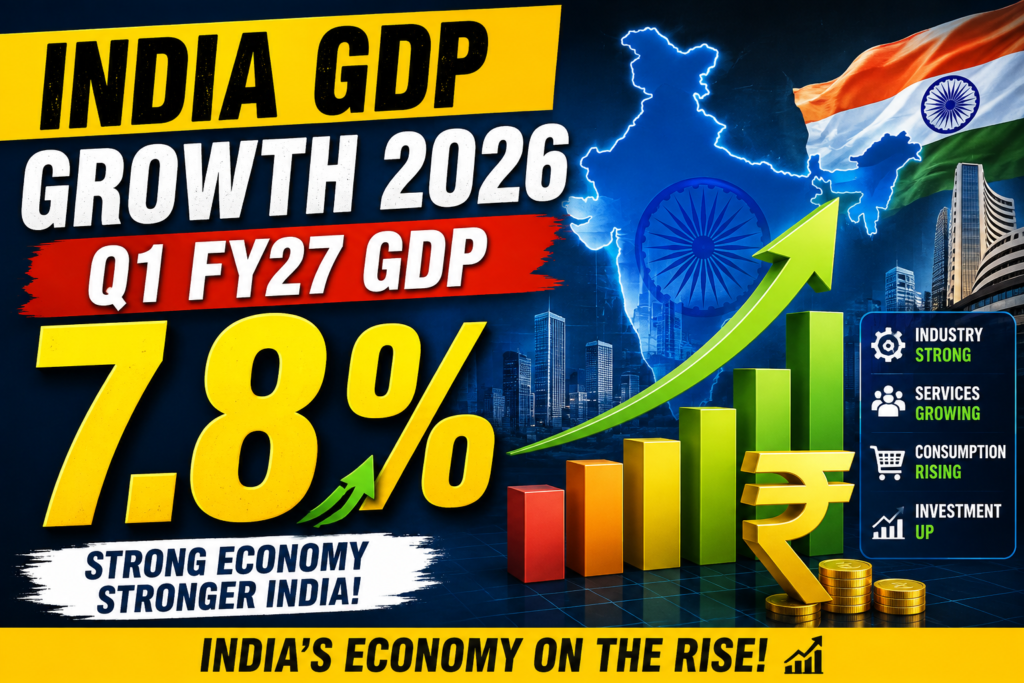
  • India GDP Growth 2026 тАУ Q1 FY27 GDP 7.8%

    India GDP Growth 2026 рдЗрд╕ рд╕рдордп рдЪрд░реНрдЪрд╛ рдореЗрдВ рд╣реИ, рдХреНрдпреЛрдВрдХрд┐ рд╡рд┐рддреНрдд рд╡рд░реНрд╖ 2026-27 рдХреА рдкрд╣рд▓реА рддрд┐рдорд╛рд╣реА рдпрд╛рдиреА Q1 FY27 рдореЗрдВ рднрд╛рд░рдд рдХреА GDP growth 7.8% рджрд░реНрдЬ рдХреА рдЧрдИ рд╣реИред рдпрд╣ рдЖрдВрдХрдбрд╝рд╛ рднрд╛рд░рддреАрдп рдЕрд░реНрдерд╡реНрдпрд╡рд╕реНрдерд╛ рдХреА рдордЬрдмреВрдд рдЧрддрд┐рд╡рд┐рдзрд┐рдпреЛрдВ рдХреЛ рджрд░реНрд╢рд╛рддрд╛ рд╣реИред

    Q1 FY27 GDP Growth рдХреНрдпрд╛ рд╣реИ?

    Q1 FY27 рдХрд╛ рдорддрд▓рдм рд╡рд┐рддреНрдд рд╡рд░реНрд╖ 2026-27 рдХреА рдкрд╣рд▓реА рддрд┐рдорд╛рд╣реА рд╕реЗ рд╣реИ, рдЬреЛ рдЕрдкреНрд░реИрд▓ рд╕реЗ рдЬреВрди 2026 рддрдХ рдХреА рдЕрд╡рдзрд┐ рдХреЛ рдХрд╡рд░ рдХрд░рддреА рд╣реИред рдЗрд╕ рджреМрд░рд╛рди рднрд╛рд░рдд рдХреА рдЕрд░реНрдерд╡реНрдпрд╡рд╕реНрдерд╛ рдиреЗ 7.8% рдХреА рд╡реГрджреНрдзрд┐ рджрд░реНрдЬ рдХреАред

    GDP Growth рдмрдврд╝рдиреЗ рдХреЗ рдкреНрд░рдореБрдЦ рдХрд╛рд░рдг

    рднрд╛рд░рдд рдХреА GDP growth рдХреЛ рдХрдИ рдХреНрд╖реЗрддреНрд░реЛрдВ рд╕реЗ рд╕рдорд░реНрдерди рдорд┐рд▓рд╛ рд╣реИ:

    • Manufacturing рдФрд░ industrial activity рдореЗрдВ рдордЬрдмреВрддреА
    • Services sector рдХрд╛ рдмреЗрд╣рддрд░ рдкреНрд░рджрд░реНрд╢рди
    • рдШрд░реЗрд▓реВ consumption рдореЗрдВ рдмрдврд╝реЛрддрд░реА
    • Infrastructure рдФрд░ construction activity
    • Government рдФрд░ private sector investment

    рднрд╛рд░рддреАрдп рдЕрд░реНрдерд╡реНрдпрд╡рд╕реНрдерд╛ рдкрд░ рдЕрд╕рд░

    7.8% GDP growth рднрд╛рд░рдд рдХреА economic strength рдХреЗ рд▓рд┐рдП рд╕рдХрд╛рд░рд╛рддреНрдордХ рд╕рдВрдХреЗрдд рдорд╛рдирд╛ рдЬрд╛ рд╕рдХрддрд╛ рд╣реИред рдордЬрдмреВрдд growth рд╕реЗ рд░реЛрдЬрдЧрд╛рд░, business activity рдФрд░ investment sentiment рдХреЛ support рдорд┐рд▓ рд╕рдХрддрд╛ рд╣реИред

    рд╣рд╛рд▓рд╛рдВрдХрд┐, global economic conditions, crude oil prices, inflation рдФрд░ international trade рдЬреИрд╕реЗ factors рдЖрдЧреЗ рдХреА growth рдХреЛ рдкреНрд░рднрд╛рд╡рд┐рдд рдХрд░ рд╕рдХрддреЗ рд╣реИрдВред

    рдЖрдЧреЗ рдХреНрдпрд╛ рдЙрдореНрдореАрдж рд╣реИ?

    рдЖрдиреЗ рд╡рд╛рд▓реА рддрд┐рдорд╛рд╣рд┐рдпреЛрдВ рдореЗрдВ рднрд╛рд░рдд рдХреА growth рдкрд░ domestic demand, government spending, private investment рдФрд░ global market conditions рдХрд╛ рдЕрд╕рд░ рд░рд╣реЗрдЧрд╛ред Investors рдФрд░ businesses рдЖрдиреЗ рд╡рд╛рд▓реЗ economic data рдкрд░ рдирдЬрд░ рд░рдЦреЗрдВрдЧреЗред

    рдирд┐рд╖реНрдХрд░реНрд╖

    India GDP Growth 2026 тАУ Q1 FY27 GDP 7.8% рднрд╛рд░рддреАрдп рдЕрд░реНрдерд╡реНрдпрд╡рд╕реНрдерд╛ рдХреЗ рд▓рд┐рдП рдПрдХ рдорд╣рддреНрд╡рдкреВрд░реНрдг development рд╣реИред рдордЬрдмреВрдд GDP growth рд╕реЗ рднрд╛рд░рдд рдХреА economic outlook рдХреЛ рд╕рдХрд╛рд░рд╛рддреНрдордХ momentum рдорд┐рд▓ рд╕рдХрддрд╛ рд╣реИред рдЖрдиреЗ рд╡рд╛рд▓реЗ рдорд╣реАрдиреЛрдВ рдореЗрдВ growth рдХреА sustainability рдкрд░ рдЦрд╛рд╕ рдзреНрдпрд╛рди рд░рд╣реЗрдЧрд╛ред

    Keywords: India GDP Growth 2026, Q1 FY27 GDP 7.8%, India Economy 2026, Indian Economy Growth, GDP Growth India

  • Stock Market

    Latest Updates, Trends and What Investors Should Know ЁЯУИ

    The stock market is an important part of the financial system and attracts millions of investors every day. In India, investors mainly follow the Nifty 50 and Sensex to understand the overall direction of the market.

    What Is the Stock Market?

    The stock market is a place where shares of publicly listed companies are bought and sold. Investors can purchase shares with the expectation that the value of their investment may increase over time.

    The Indian stock market is mainly represented by two major exchanges:

    • NSE (National Stock Exchange)
    • BSE (Bharat Stock Exchange)

    Nifty 50 and Sensex

    The Nifty 50 tracks 50 major companies listed on the NSE, while the Sensex tracks 30 major companies listed on the BSE.

    When these indices rise, it generally indicates positive market sentiment. When they fall, investors may become more cautious.

    What Affects the Stock Market?

    Several factors can influence stock prices and market trends:

    • Global market movements
    • Interest-rate decisions
    • Inflation and economic data
    • Company earnings
    • Crude oil prices
    • Foreign investor buying and selling
    • Government policies
    • Geopolitical developments

    Stock Market Today

    Investors usually watch market opening trends, Nifty and Sensex movements, sector performance and major company announcements.

    Banking, IT, automobile, energy and pharmaceutical stocks are some of the sectors commonly tracked by investors.

    Market movements can change quickly, so investors should check the latest market data before making investment decisions.

    Tips for Stock Market Investors

    New investors should focus on learning about companies and understanding market risks before investing.

    Some basic tips include:

    • Do proper research before buying shares.
    • Avoid making decisions based only on social-media trends.
    • Maintain a diversified portfolio.
    • Invest according to your financial goals and risk level.
    • Think about long-term performance rather than short-term market fluctuations.

    Conclusion

    The stock market can provide opportunities for wealth creation, but it also involves risks. Following Nifty, Sensex, company results and important economic developments can help investors better understand market trends.

    Investors should always conduct their own research and consider professional financial advice when necessary.