Blog

  • Technology & AI News

    Technology & AI News is becoming increasingly important in India as artificial intelligence, cloud computing, data centres and digital services continue to expand.

    AI Growth in India

    Artificial intelligence is moving from experimentation toward wider real-world use in India. Recent industry reports indicate that growing AI consumption is increasing demand for data-centre capacity in the country.

    Businesses are increasingly using AI for customer service, software development, data analysis, banking and other operations.

    Microsoft Expands Data-Centre Infrastructure

    Microsoft recently opened its largest data-centre hub in India in Hyderabad. The company now has four cloud regions in the country, with other locations in Pune, Chennai and Mumbai.

    The expansion highlights the growing demand for cloud computing and AI infrastructure in India.

    AI and Indian Businesses

    AI adoption is also becoming important for Indian companies and startups. Businesses are exploring AI-powered tools to improve productivity, automate repetitive work and provide faster services.

    Financial institutions are also looking at responsible AI adoption. RBI Governor Sanjay Malhotra recently highlighted the potential of AI for Indian banks while stressing the importance of governance and cybersecurity.

    AI Startups and Innovation

    India’s technology ecosystem continues to attract AI companies and startups. Open-weight models, local-language AI and AI-powered applications are creating new opportunities for developers and businesses.

    Local-language technology is particularly important for India because millions of users communicate in different Indian languages and dialects.

    Key Technology Trends

    Important areas to watch in Technology & AI News include:

    • Artificial intelligence
    • AI-powered applications
    • Cloud computing
    • Data centres
    • Cybersecurity
    • AI startups
    • Smartphones and gadgets
    • Digital payments
    • Local-language technology

    Future of AI in India

    India has a large internet user base and a growing technology workforce, making the country an important market for AI companies. The next phase of development is likely to focus on practical AI applications, infrastructure, security and responsible use.

    Conclusion

    Technology & AI News in India is increasingly focused on the practical use of artificial intelligence and the infrastructure needed to support it. From data centres and cloud services to AI startups and banking applications, technology is becoming a bigger part of India’s digital economy.


  • India Defence & Security News

    India Defence & Security News remains an important topic as security agencies continue to strengthen border surveillance and national security arrangements. With Independence Day approaching, security forces have increased their preparedness across sensitive areas.

    BSF Operation Alert

    The Border Security Force (BSF) has launched Operation Alert along India’s western border with Pakistan from August 10 to August 17, 2026. The exercise is being conducted ahead of Independence Day to strengthen vigilance and prevent possible infiltration, smuggling and other security threats.

    Senior BSF officers and personnel are monitoring sensitive border areas as part of the security exercise.

    Border Security in Focus

    Border security remains one of the major areas of India’s national security strategy. Security forces are focusing on surveillance, patrolling and preventing illegal cross-border activities.

    Modern technologies such as drones, sensors and surveillance systems are also becoming increasingly important for monitoring difficult border areas.

    Jammu & Kashmir Security

    Security forces continue to maintain a high level of alert in Jammu & Kashmir. Recent reports have highlighted surveillance and search operations following the sighting of a suspected Pakistani drone in Kathua.

    Security agencies are continuing operations to detect and prevent possible terrorist or cross-border activities.

    Drone Threats and Surveillance

    Drones have emerged as an important security challenge along India’s borders. They can potentially be used for surveillance, smuggling and other illegal activities.

    As a result, security agencies are focusing on better drone detection and counter-drone capabilities to protect sensitive areas.

    Independence Day Security

    India will celebrate its Independence Day on August 15, 2026. Security arrangements are being strengthened across the country, particularly around important government buildings, public places, transport hubs and border areas.

    Security agencies are coordinating their efforts to ensure peaceful celebrations.

    Why India Defence & Security News Matters

    The latest India Defence & Security News is important because national security affects citizens, border communities and India’s overall strategic preparedness.

    Key areas being watched include:

    • Border security
    • Counter-terrorism operations
    • Drone surveillance
    • Defence preparedness
    • Cybersecurity
    • Internal security
    • Modernisation of armed forces

    Conclusion

    The India Defence & Security News landscape remains focused on border vigilance, national security and defence preparedness. The latest BSF Operation Alert ahead of Independence Day highlights the importance of maintaining strong security arrangements.

    As security developments continue, people should rely on official government announcements and credible news sources for verified information.

  • Parliament Monsoon Session 2026

    The Parliament Monsoon Session 2026 is underway, with the government and opposition focusing on several important legislative and national issues. The session has also seen disruptions and political disagreements between the two sides.

    Parliament Monsoon Session 2026 Dates

    According to PRS Legislative Research, the Monsoon Session is scheduled from July 20 to August 13, 2026, with 19 sittings planned.

    With the session approaching its final days, Parliament is witnessing increased activity over pending Bills and important political issues.

    Major Bills Under Discussion

    Several Bills have been introduced or considered during the session. Recent legislative activity includes the Kerala (Alteration of Name) Bill, 2026, Tribunals Reforms Bill, Mines and Minerals (Development and Regulation) Amendment Bill and National Co-operative Development Corporation (Amendment) Bill.

    On August 11, the Lok Sabha passed the Kerala (Alteration of Name) Bill, 2026, which proposes changing the state’s name from Kerala to Keralam.

    Government and Opposition Face-Off

    Political disagreements have remained a major feature of the Parliament Monsoon Session 2026. Opposition MPs have raised several issues and protests have disrupted proceedings.

    The government has also offered to allow discussion on student protests and indicated that Home Minister Amit Shah could make a statement in the Lok Sabha. The opposition, however, has continued to press its demands.

    FCRA Bill Debate

    The proposed Foreign Contribution Regulation Amendment (FCRA) Bill has become another major point of debate. The government has indicated that the Bill could potentially be referred to a Joint Parliamentary Committee for further examination, while opposition parties have raised strong objections.

    Why the Session Is Important

    The Parliament Monsoon Session is important because decisions taken during the session can affect areas such as:

    • Governance and administration
    • Economy and taxation
    • Education and social issues
    • Mining and natural resources
    • Cooperative development
    • Legal and judicial reforms

    Latest Parliament Update

    As the session enters its final phase, attention is on whether the government and opposition can reach agreement on important pending business. The remaining sittings are expected to see further discussions, debates and voting on Bills.

    Conclusion

    The Parliament Monsoon Session 2026 is witnessing important legislative activity along with strong political disagreements. Bills related to governance, taxation, mining and other sectors are being considered, while protests and opposition demands continue to affect proceedings.

    Readers should follow official Parliament announcements and reliable news sources for the latest updates as the session progresses.

  • India Monsoon & Heavy Rain

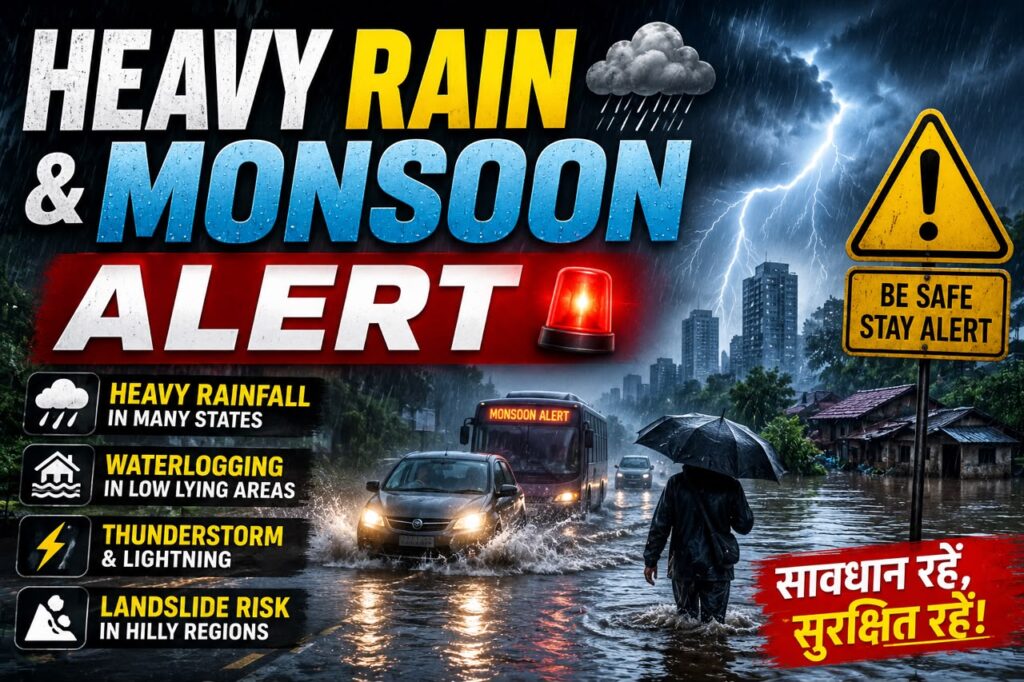
    India Monsoon & Heavy Rain Updates are important as several parts of the country continue to experience active monsoon conditions. The India Meteorological Department (IMD) has issued rainfall and thunderstorm warnings for several regions on August 11, 2026.

    Heavy Rainfall Alert

    The IMD has issued a heavy rain warning for Haryana, Chandigarh and Delhi for August 11. Himachal Pradesh has also been placed under a very heavy rainfall warning, with heavy rain expected on August 12.

    Gujarat and parts of Rajasthan are also under weather warnings, including heavy rain, thunderstorms and lightning.

    Impact on Daily Life

    Heavy rainfall can affect road traffic, public transport and local services. Waterlogging may also occur in low-lying areas, while strong winds and lightning can create additional risks during thunderstorms.

    People in affected areas should monitor official weather updates before making travel plans.

    IMD Weather Updates

    The India Meteorological Department regularly provides rainfall observations, forecasts and warnings for different parts of the country. Residents should follow official alerts for their district and state.

    Conclusion

    The India Monsoon & Heavy Rain Updates remain important today as multiple regions face heavy rainfall and thunderstorms. People should remain alert, avoid unnecessary travel during severe weather and follow local administration and IMD advisories.

  • Stock Market Today

    Stock Market Today is expected to remain closely watched by investors as domestic and global factors influence market sentiment. Investors are tracking the Nifty 50, Sensex, global markets, crude oil prices and foreign investment flows.

    Market Opening

    Before the August 11 trading session, GIFT Nifty was trading around 24,614.50, indicating a largely flat start compared with the previous session.

    In the previous session, the Nifty 50 closed at around 24,583.80, while the Sensex ended near 78,542.44.

    Key Factors to Watch

    Several factors could influence the Indian stock market today:

    • Nifty 50 and Sensex movement
    • Crude oil prices
    • Rupee movement
    • Foreign Institutional Investor (FII) activity
    • Global market trends
    • Company-specific news and quarterly results

    Crude oil prices are particularly important for India because changes in oil prices can influence inflation, the rupee and corporate costs.

    Sector Performance

    Investors may continue to focus on banking, IT, automobiles, energy, pharmaceuticals and other major sectors. Individual stocks could also see movement based on company announcements and market sentiment.

    Investor Caution

    Stock markets can move quickly during the trading session. Investors should consider market volatility and conduct proper research before making investment decisions.

    Conclusion

    Stock Market Today is likely to remain sensitive to global cues, crude oil prices, institutional flows and domestic developments. Traders and investors should watch the Nifty 50 and Sensex closely throughout the session.

  • BSF Operation Alert 2026

    Introduction

    BSF Operation Alert 2026 is drawing attention as security arrangements are being strengthened along India’s western border ahead of Independence Day. The Border Security Force (BSF) is increasing vigilance to prevent any possible infiltration or security threat.

    What Is Operation Alert?

    Operation Alert is a security exercise carried out by the BSF along sensitive border areas. During the operation, security personnel maintain increased surveillance and conduct checks in vulnerable locations.

    The aim is to identify and prevent possible threats before they can affect border security.

    Why Is BSF Increasing Security?

    The period before August 15, Independence Day, is considered important from a national-security perspective. Security agencies generally increase their alertness around this time.

    BSF personnel may conduct:

    • Increased border patrolling
    • Surveillance and checking
    • Vehicle and identity checks in sensitive areas
    • Monitoring of suspicious movements
    • Coordination with other security agencies

    Importance for Border Security

    India’s western border includes several sensitive areas where strict monitoring is important. Increased vigilance helps security forces respond quickly to suspicious activity and maintain peace in border regions.

    The operation also highlights the important role of the BSF in protecting India’s borders.

    Independence Day Security

    With Independence Day approaching, security arrangements are being strengthened at important locations across the country. Border security is an important part of these preparations.

    Conclusion

    BSF Operation Alert 2026 highlights the increased focus on border security ahead of Independence Day. Through surveillance, patrolling and coordinated security measures, the BSF continues to maintain vigilance along sensitive border areas.

    This article is for general informational purposes. Security measures and operational details may change according to official directions.

  • India Rupee & Oil Prices

    Introduction

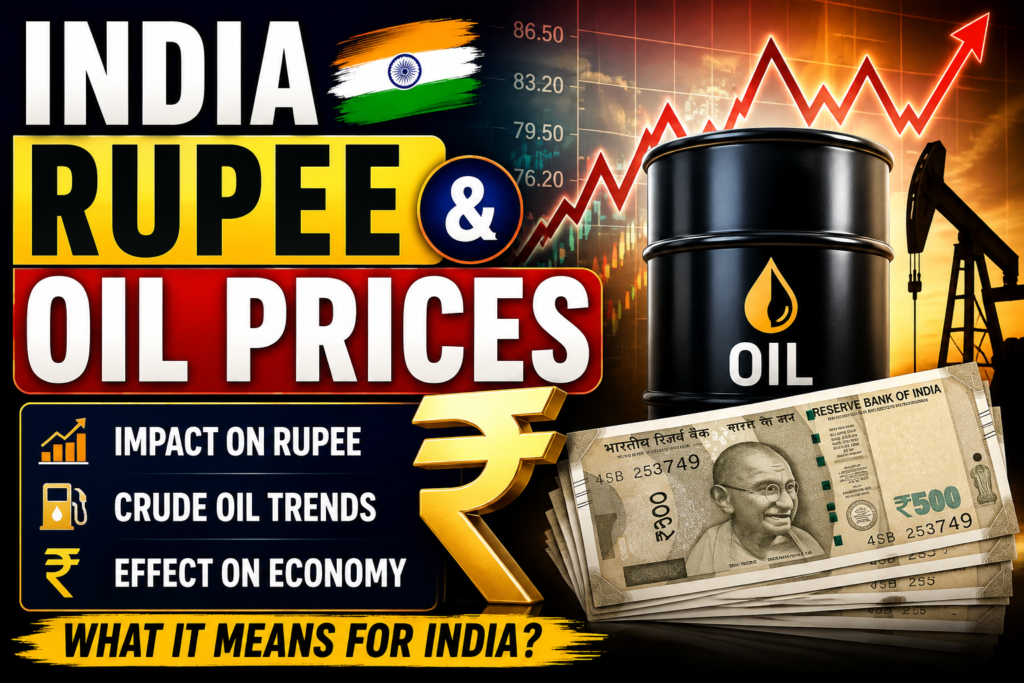
    India Rupee & Oil Prices are closely connected because India imports a large amount of crude oil to meet its energy requirements. Changes in global oil prices can therefore influence the value of the Indian rupee, fuel costs and the wider economy.

    Why Are Oil Prices Important for India?

    Crude oil is an important import for India. When international oil prices rise, Indian companies generally need more foreign currency to pay for oil imports.

    This can put pressure on the Indian rupee if other factors remain unchanged.

    Impact on the Indian Rupee

    Higher crude oil prices can increase India’s import bill. A larger import bill can increase demand for US dollars and put pressure on the rupee.

    On the other hand, lower oil prices can reduce the country’s import costs and may provide some support to the rupee.

    However, the rupee is affected by several other factors, including:

    • US dollar movements
    • Foreign investment flows
    • Global interest rates
    • India’s trade balance
    • Geopolitical developments
    • Reserve Bank of India policies

    Impact on Petrol and Diesel Prices

    Global crude oil prices are also an important factor in determining domestic fuel prices. Changes in international oil markets can influence the costs faced by Indian fuel companies.

    However, domestic fuel prices do not always move immediately with international crude prices because taxation, exchange rates and other factors also play a role.

    Impact on Inflation

    A sustained increase in oil prices can raise transportation and production costs. This can affect the prices of goods and services and may contribute to inflationary pressure.

    Lower oil prices can have the opposite effect by reducing some transportation and production costs.

    What Should Investors Watch?

    Investors following India Rupee & Oil Prices should keep an eye on international crude prices, the US dollar, geopolitical developments and India’s economic data.

    Stock-market sectors such as aviation, transportation, oil marketing and other energy-related businesses can also be affected by changes in crude oil prices.

    Conclusion

    India Rupee & Oil Prices remain important indicators for India’s economy. Changes in crude oil prices can influence the import bill, rupee, inflation and business costs.

    For this reason, both global oil markets and currency movements are closely watched by policymakers, businesses and investors.

  • Education & Student Protests in India

    Education & Student Protests continue to attract attention across India as students raise concerns about examinations, recruitment, admissions, fees and education policies. Student groups often use protests to demand changes and seek faster action from authorities.

    Why Are Students Protesting?

    Students may protest when they believe an education-related decision is unfair or when their concerns are not addressed. Common issues include:

    • Examination and result delays
    • Recruitment and government job examinations
    • Admission and counselling problems
    • Examination paper leaks and irregularities
    • Fee-related concerns
    • Changes in education policies
    • Lack of facilities in educational institutions

    Exam and Recruitment Issues

    Competitive examinations are an important issue for many young people. Delays in exams, changes in schedules, technical problems and allegations of irregularities can create uncertainty for students preparing for months.

    Students often demand clear schedules, transparent examination processes and timely results.

    Demand for Transparency

    A major concern among student groups is transparency. Students want examination authorities and educational institutions to provide clear information about important decisions.

    When problems occur, students may demand investigations, re-examinations or corrective measures depending on the situation.

    Education Policy and Student Concerns

    Changes in education policy can also lead to discussions and protests. Students may raise questions about curriculum changes, examination systems, admissions and the implementation of new rules.

    Student organisations often ask authorities to consult students before making major changes that directly affect their education.

    Role of Social Media

    Social media has become an important platform for student movements. Students can share information, organise campaigns and bring attention to their demands quickly.

    However, students should verify information before sharing it because misleading posts can create confusion during protests.

    Government and University Response

    Government departments, examination authorities and universities are responsible for addressing genuine student concerns. Authorities may hold discussions with student representatives, review complaints and announce corrective measures where necessary.

    At the same time, protests should remain peaceful and follow applicable laws and institutional rules.

    What Students Should Know

    Students taking part in campaigns or protests should:

    • Check information from official sources.
    • Understand the issue before participating.
    • Keep copies of important applications or documents.
    • Follow lawful and peaceful protest procedures.
    • Avoid spreading unverified information.
    • Monitor official announcements for updates.

    Conclusion

    The topic of Education & Student Protests reflects the growing importance of student voices in India’s education system. Issues related to examinations, admissions, recruitment and education policies can have a major impact on students’ careers.

    Constructive dialogue between students, educational institutions and authorities can help resolve genuine concerns and improve transparency in the education system.

  • UP Expressway Damage After Heavy Rain

    The newly opened Lucknow-Kanpur Expressway in Uttar Pradesh has come into the spotlight after heavy rain caused damage to parts of the road. The incident has raised concerns about road construction, drainage and infrastructure quality during the monsoon season.

    What Happened?

    A section of the Lucknow-Kanpur Expressway developed serious damage following heavy rainfall. Reports said a portion of the road experienced slippage and cracks, while potholes were also reported at some locations.

    The affected section is in Uttar Pradesh’s Unnao area. Traffic restrictions and repair work were introduced to protect commuters while the damaged portions were being assessed and repaired.

    Toll Collection Suspended

    The National Highways Authority of India (NHAI) suspended toll collection on the expressway while repair work was carried out. The decision was aimed at allowing necessary repairs and ensuring commuter safety.

    Why Heavy Rain Is a Concern

    Heavy rainfall can put significant pressure on roads, particularly when water drainage is inadequate. Water entering road layers can weaken the surface and foundation, potentially leading to cracks, potholes and soil movement.

    The latest damage has therefore renewed discussions about the importance of proper drainage and quality checks for major infrastructure projects.

    Repair Work Underway

    Repair teams have been working on the affected areas. Reports also showed the use of pedestal fans to help dry sections of the damaged road before further repair work.

    Authorities and the project contractor are expected to focus on restoring the affected sections and making the route safe for regular traffic.

    What It Means for Commuters

    Drivers using the Lucknow-Kanpur route should remain alert for diversions, reduced speeds and temporary restrictions around repair zones.

    The expressway was designed to provide faster connectivity between Lucknow and Kanpur, making its condition important for daily commuters and regional transport.

    Conclusion

    The UP Expressway Damage After Heavy Rain has highlighted the challenges of maintaining major roads during the monsoon. Quick repairs are important, but long-term solutions should also focus on drainage, construction quality and regular inspections.

    The incident is likely to keep attention on the quality and durability of newly constructed infrastructure in Uttar Pradesh.

  • India Defence & Fighter Jet News

    India’s defence aviation sector is going through an important phase, with developments involving Rafale fighter jets, Tejas Mk1A and the Advanced Medium Combat Aircraft (AMCA).

    The government is focusing on strengthening the Indian Air Force while also increasing domestic production and defence technology.

    114 Rafale Fighter Jets Proposal

    One of the biggest recent developments is France’s submission of a formal technical and commercial proposal to India for 114 Rafale fighter jets.

    The proposed deal is estimated at around ₹3.25 lakh crore. It also includes plans for local production and technology transfer, supporting India’s wider push for defence manufacturing in the country.

    India and Sixth-Generation Fighter Technology

    India is also looking at future fighter technology. The government has confirmed that discussions are taking place with France regarding possible participation in the Future Combat Air System (FCAS) programme.

    The programme is focused on next-generation air combat capabilities, including advanced aircraft, stealth technology, artificial intelligence and unmanned systems.

    Tejas Mk1A Development

    The indigenous LCA Tejas Mk1A remains an important part of India’s fighter aircraft strategy.

    DRDO has developed an indigenous radome for the Tejas Mk1A. The component has completed important structural, mechanical and electromagnetic evaluations and is moving towards flight trials and industrial production.

    This type of domestic technology development can reduce dependence on imported components.

    AMCA: India’s Future Stealth Fighter

    India is also developing the Advanced Medium Combat Aircraft (AMCA), a proposed fifth-generation fighter aircraft.

    The Defence Ministry has moved forward with industry participation in the programme, with shortlisted Indian companies expected to work on prototypes. The project is intended to strengthen India’s long-term indigenous fighter aircraft capabilities.

    Why Fighter Jets Are Important for India

    Modern fighter aircraft are important for air defence, surveillance, deterrence and combat operations.

    India is working on a combination of imported platforms such as Rafale and indigenous aircraft such as Tejas and AMCA. This approach aims to address immediate operational requirements while developing domestic aerospace capabilities for the future.

    Focus on Self-Reliance

    A major theme in India’s defence strategy is self-reliance. Indigenous aircraft, engines, radars, missiles and other systems can help reduce dependence on foreign suppliers.

    Recent developments in Tejas components and the AMCA programme show the growing role of Indian companies and research organisations in defence aviation.

    Conclusion

    The latest India Defence & Fighter Jet News shows that India’s military aviation sector is moving on several fronts. The proposed 114 Rafale acquisition could strengthen the IAF in the near term, while Tejas and AMCA remain important to India’s long-term goal of building a stronger domestic fighter aircraft industry.

    With next-generation technologies also receiving attention, India’s fighter jet programme is expected to remain an important defence topic in the coming years.