Introduction
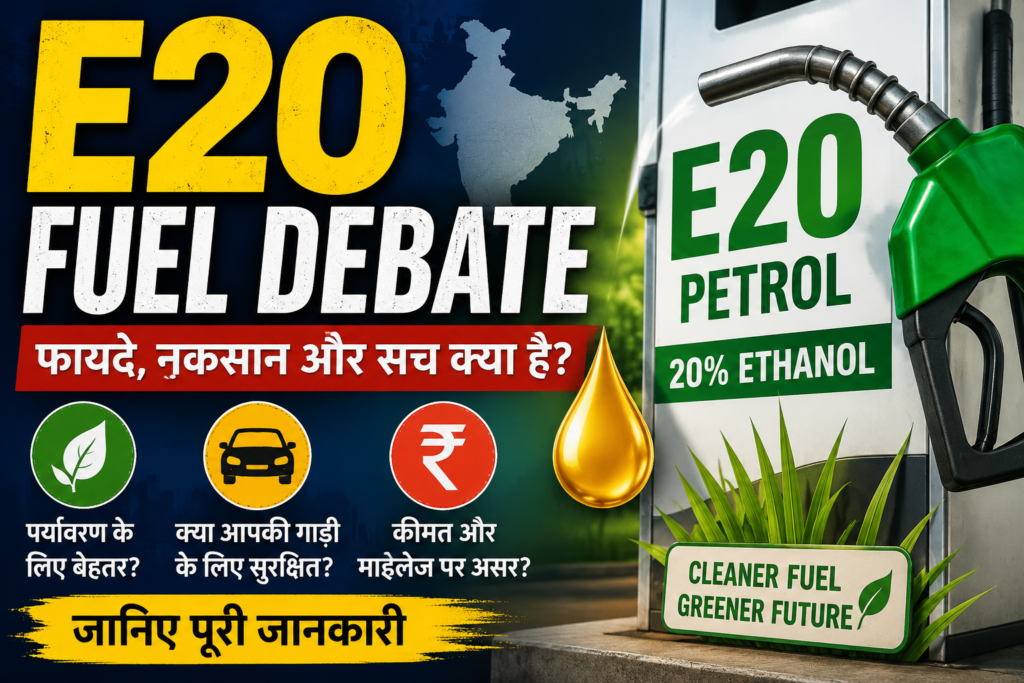
The E20 Fuel Debate has become an important topic in India as the government promotes cleaner and more sustainable fuel options. E20 fuel contains 20% ethanol and 80% petrol. It is expected to reduce fuel imports, lower pollution, and support farmers by increasing the demand for ethanol made from crops such as sugarcane and maize.
However, the move has also raised concerns among vehicle owners, automobile companies, and experts.
What Is E20 Fuel?
E20 fuel is a blend of:
- 20% Ethanol
- 80% Petrol
Ethanol is a renewable fuel produced from agricultural products. It burns cleaner than regular petrol and helps reduce carbon emissions.
Why Is India Promoting E20 Fuel?
The government is encouraging the use of E20 fuel for several reasons:
- Reduce India’s dependence on imported crude oil.
- Lower air pollution and greenhouse gas emissions.
- Support farmers by increasing demand for ethanol-producing crops.
- Improve energy security and promote clean fuel.
Why Is There a Debate?
The E20 fuel policy has created discussions because of several concerns:
1. Vehicle Compatibility
Many older vehicles are not designed to use E20 fuel. Using it in incompatible engines may affect performance and fuel efficiency.
2. Fuel Economy
Some experts believe vehicles may deliver slightly lower mileage with E20 fuel because ethanol contains less energy than petrol.
3. Infrastructure Challenges
Fuel stations and oil companies need proper infrastructure to store and distribute E20 fuel across the country.
4. Cost for Consumers
Vehicle owners may need to upgrade or replace older vehicles if they are not compatible with E20 fuel in the future.
Benefits of E20 Fuel
- Reduces carbon emissions.
- Helps decrease crude oil imports.
- Supports Indian farmers.
- Encourages the use of renewable energy.
- Contributes to environmental protection.
Challenges
- Compatibility issues with older vehicles.
- Possible reduction in fuel efficiency.
- Need for better fuel distribution infrastructure.
- Public awareness about E20 fuel.
Tips for Vehicle Owners
- Check your vehicle manual to confirm E20 compatibility.
- Follow the manufacturer’s fuel recommendations.
- Stay updated with official announcements.
- Service your vehicle regularly for better performance.
Conclusion
The E20 Fuel Debate highlights both the opportunities and challenges of adopting cleaner fuels in India. While E20 fuel can reduce pollution, support farmers, and improve energy security, its successful implementation depends on vehicle compatibility, infrastructure, and public awareness. Staying informed will help consumers make better decisions as the transition continues.
Keywords: E20 Fuel Debate, E20 Fuel India, Ethanol Blended Petrol, E20 Petrol Benefits, E20 Fuel Vehicles, India Fuel Policy, Renewable Fuel India, Clean Energy India.
Leave a Reply