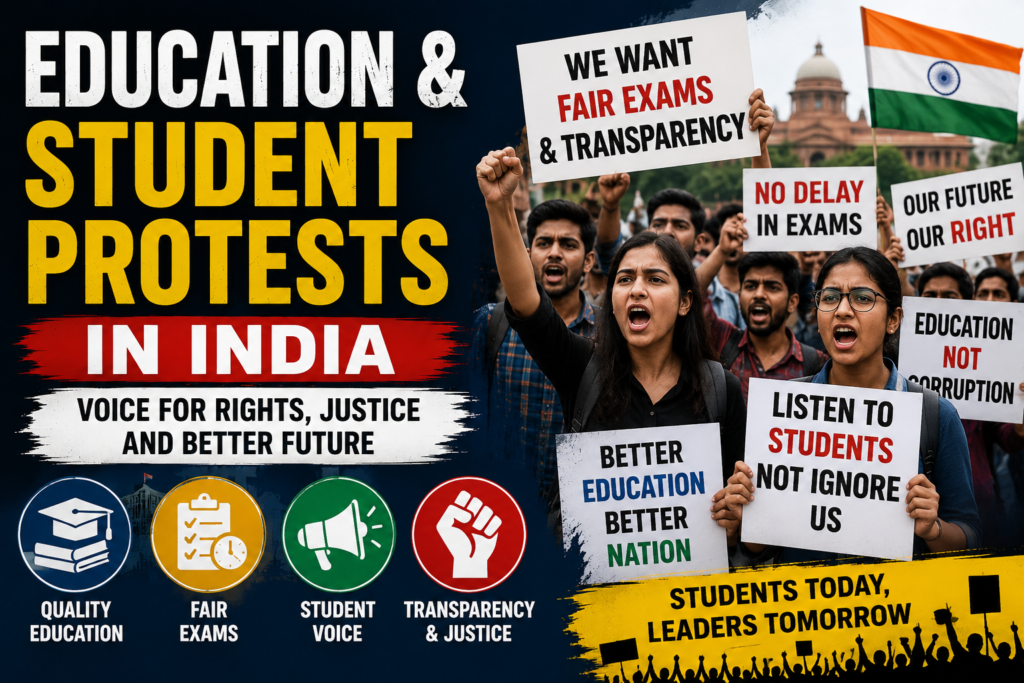
Education & Student Protests continue to attract attention across India as students raise concerns about examinations, recruitment, admissions, fees and education policies. Student groups often use protests to demand changes and seek faster action from authorities.
Why Are Students Protesting?
Students may protest when they believe an education-related decision is unfair or when their concerns are not addressed. Common issues include:
- Examination and result delays
- Recruitment and government job examinations
- Admission and counselling problems
- Examination paper leaks and irregularities
- Fee-related concerns
- Changes in education policies
- Lack of facilities in educational institutions
Exam and Recruitment Issues
Competitive examinations are an important issue for many young people. Delays in exams, changes in schedules, technical problems and allegations of irregularities can create uncertainty for students preparing for months.
Students often demand clear schedules, transparent examination processes and timely results.
Demand for Transparency
A major concern among student groups is transparency. Students want examination authorities and educational institutions to provide clear information about important decisions.
When problems occur, students may demand investigations, re-examinations or corrective measures depending on the situation.
Education Policy and Student Concerns
Changes in education policy can also lead to discussions and protests. Students may raise questions about curriculum changes, examination systems, admissions and the implementation of new rules.
Student organisations often ask authorities to consult students before making major changes that directly affect their education.
Role of Social Media
Social media has become an important platform for student movements. Students can share information, organise campaigns and bring attention to their demands quickly.
However, students should verify information before sharing it because misleading posts can create confusion during protests.
Government and University Response
Government departments, examination authorities and universities are responsible for addressing genuine student concerns. Authorities may hold discussions with student representatives, review complaints and announce corrective measures where necessary.
At the same time, protests should remain peaceful and follow applicable laws and institutional rules.
What Students Should Know
Students taking part in campaigns or protests should:
- Check information from official sources.
- Understand the issue before participating.
- Keep copies of important applications or documents.
- Follow lawful and peaceful protest procedures.
- Avoid spreading unverified information.
- Monitor official announcements for updates.
Conclusion
The topic of Education & Student Protests reflects the growing importance of student voices in India’s education system. Issues related to examinations, admissions, recruitment and education policies can have a major impact on students’ careers.
Constructive dialogue between students, educational institutions and authorities can help resolve genuine concerns and improve transparency in the education system.
Leave a Reply