Introduction
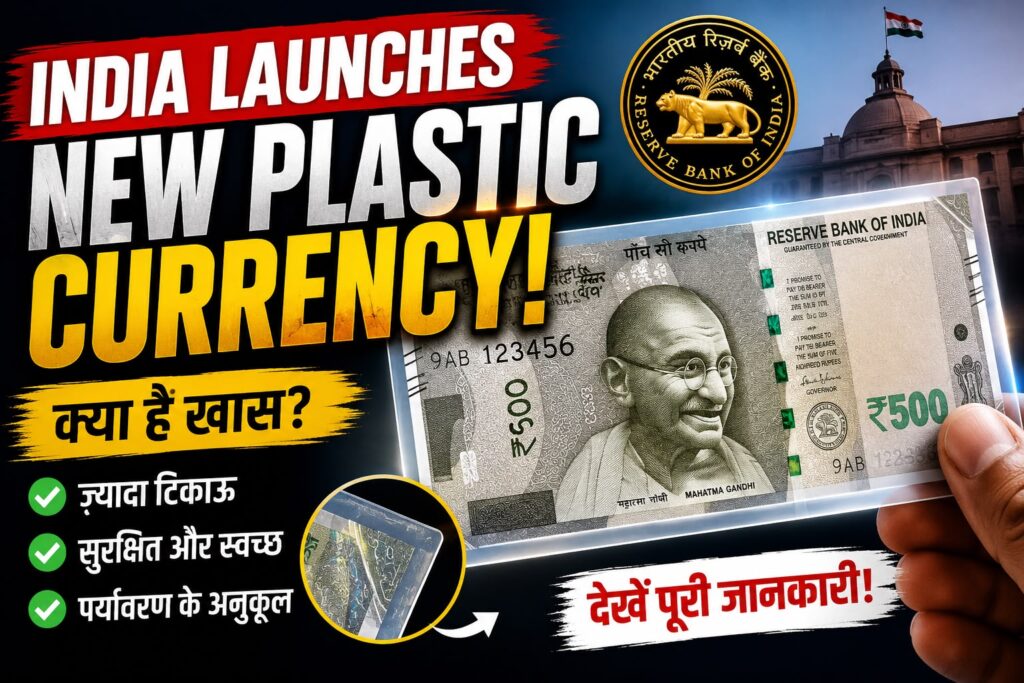
New Plastic Currency in India has become a popular topic as the Reserve Bank of India (RBI) explores new types of banknotes. Plastic currency, also known as polymer banknotes, is designed to last longer and offer better security than traditional paper notes.
What is Plastic Currency?
Plastic currency is made from a special polymer material instead of cotton-based paper. These notes are stronger, waterproof, and more resistant to damage.
Is India Introducing Plastic Currency?
The RBI has tested polymer banknotes in the past and has studied their advantages. While India has explored the idea of introducing new plastic currency, most Indian banknotes currently remain paper-based. Any nationwide rollout would be announced officially by the RBI and the Government of India.
Features of New Plastic Currency
- Made from durable polymer material
- Waterproof and difficult to tear
- Longer lifespan than paper notes
- Advanced security features
- Easy to clean and maintain
- Better protection against counterfeit notes
Benefits of Plastic Currency
1. Longer Life
Plastic notes last much longer than paper notes, reducing replacement costs.
2. Better Security
They include modern security features that make fake notes harder to produce.
3. Eco-Friendly
Although made from polymer, these notes last longer and can be recycled after use.
4. Cleaner Notes
Plastic notes absorb less dirt and moisture, making them more hygienic.
Challenges
- Higher production cost
- New printing technology required
- Public awareness and adaptation
- Recycling infrastructure needs improvement
Countries Using Plastic Currency
Many countries already use polymer banknotes, including:
- Australia
- Canada
- United Kingdom
- New Zealand
- Singapore
- Vietnam
Conclusion
The New Plastic Currency in India could make Indian banknotes more durable, secure, and long-lasting. Although India has explored polymer currency, paper notes continue to be the primary form of cash. If plastic currency is introduced nationwide in the future, it could improve the country’s currency system with better security and lower long-term costs.
Frequently Asked Questions (FAQs)
1. What is plastic currency?
Plastic currency is a banknote made from polymer instead of paper.
2. Has India introduced plastic currency?
India has tested polymer notes, but paper currency is still the main form of banknotes.
3. What are the benefits of plastic notes?
They are durable, waterproof, cleaner, and more secure than paper notes.
4. Are plastic notes difficult to counterfeit?
Yes. Polymer notes have advanced security features that make counterfeiting more difficult.
5. Which countries use plastic currency?
Countries such as Australia, Canada, the UK, Singapore, and New Zealand use polymer banknotes.
Leave a Reply